From Neglected Space to Income Hub: The Systematic 4-Step Transformation Model
A look at the four stages Doluu uses to turn underused property into a productive, community-serving asset: assessment, financing, renovation, and integration.
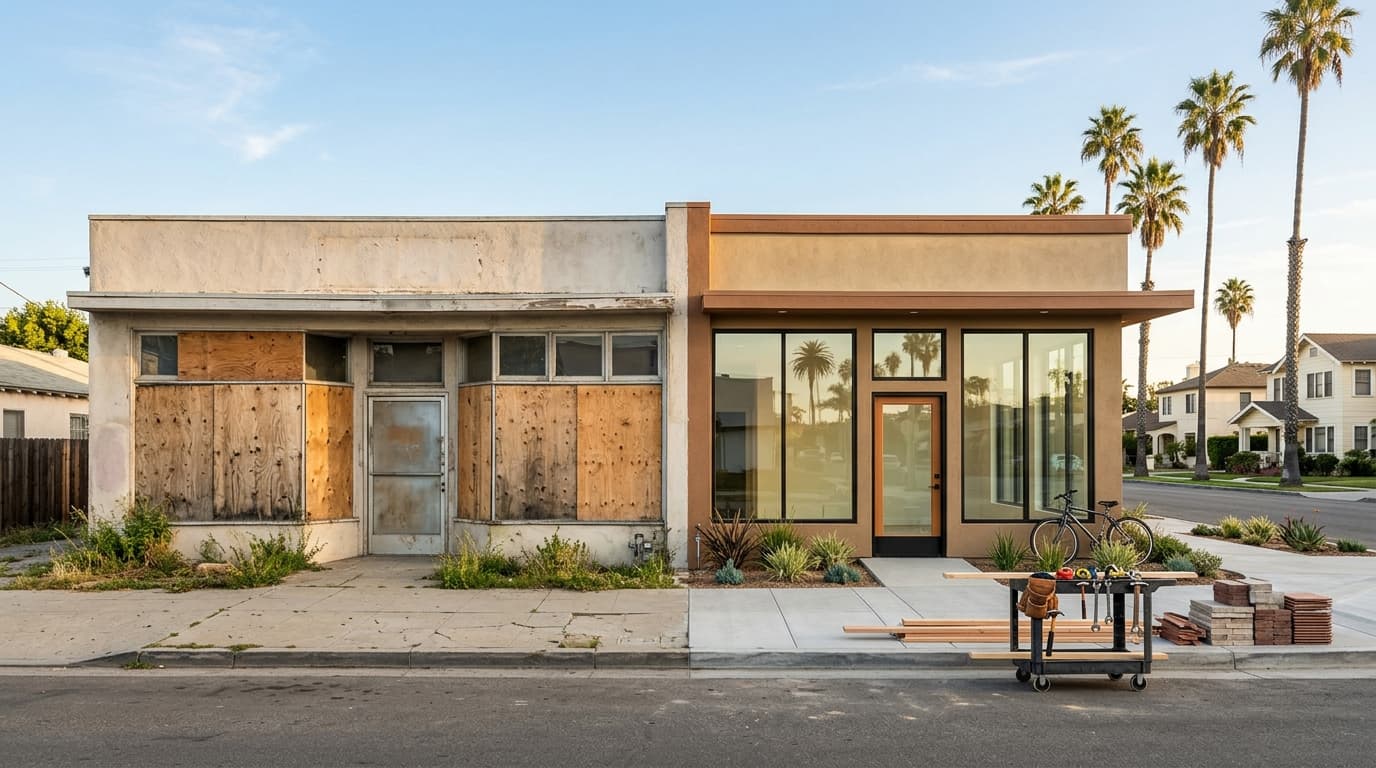
Turning a neglected property into a productive one is rarely a matter of inspiration. It is a matter of process. Without a clear sequence, projects drift: budgets balloon, timelines slip, and the finished result fails to match the opportunity. Doluu Investment Corporation uses a four-step transformation model, sometimes called our Systematic Value Creation Pathway, to keep each project disciplined from start to finish.
Step 1: Property assessment
Every successful transformation begins with an honest look at what exists. Assessment covers:
- Physical condition: structure, roof, electrical, plumbing, and envelope.
- Legal and regulatory status: zoning, permitting history, liens, and use restrictions.
- Market context: who lives or works nearby, what is in demand, and what is missing.
- Potential uses: the range of realistic options, from housing to commercial space to mixed use.
The goal is not to find reasons to proceed. It is to find the truth, including reasons to walk away. A rigorous assessment prevents expensive surprises later and clarifies where value is hiding.
Step 2: Creative financing
Many properties with real potential never get restored because they do not fit conventional lending boxes. Condition, vacancy, or unusual use can scare off traditional sources. Creative financing means matching the capital structure to the property and project rather than forcing the project into a standard template.
That may involve combining funding sources, phasing work to align with draws, or partnering with investors whose goals include community benefit alongside returns. Sound financing is conservative about assumptions and transparent about risk. It is built to survive delays and surprises, because real projects experience both.
Step 3: Skilled renovation
With assessment and funding in place, the physical work begins. This is where licensed expertise matters most. Renovation under our Class B general building and Class C10 electrical classifications means structural, mechanical, and electrical work is planned and executed together, rather than patched in sequence by unrelated parties.
Spending is directed toward changes that matter: structural integrity, safety systems, energy efficiency, functional layout, and visible quality that holds up over time. Cosmetic upgrades have their place, but they follow, rather than substitute for, sound fundamentals.
Step 4: Community integration
A finished building is not the end of the process. Integration asks how the property fits into the life of its neighborhood. Will it provide jobs during construction and operation? Does it offer space that local people can use? Is it maintained so it remains an asset rather than slipping back into disrepair?
This step is where our dual-purpose philosophy becomes tangible. Working alongside partners such as Lord's Instruments Ministries, we look for ways the project can open doors for skilled trades workers and neighbors seeking second chances.
Why a model beats improvisation
A repeatable model offers several advantages.
- Predictability. Stakeholders know what comes next and what decisions are required.
- Risk control. Problems are surfaced early, when they cost the least to solve.
- Accountability. Each stage has defined outputs, so progress can be measured.
- Learning. Lessons from one project improve the next.
Applying the model yourself
Even if you never work with us, the structure is useful. Before starting any property project, write down how you will assess, fund, build, and integrate it. If any of the four is vague, that is where the project is most likely to struggle.
Common Pitfalls to Avoid
Projects most often struggle when steps are skipped. Owners sometimes rush into renovation before completing assessment, or arrange financing around an optimistic budget rather than a tested one. Others finish construction without a plan for management and upkeep, so the building slowly declines. Treat each of the four steps as a gate: do not move on until the current one is complete, documented, and reviewed by people who are willing to challenge your assumptions.
This article is for educational purposes only and is not financial or legal advice. Each project's results depend on its specific facts and market conditions.
See the methodology in more detail
Want to understand how the four steps apply to your situation? Explore Our Transformation Methodology and see how we move from an underused property to a productive community asset.