The Housing Renewal Pathway: Turning Distressed Assets into Dignified Homes
How restoring the envelope, systems, and finishes of neglected residences creates safer, more attractive homes and quietly strengthens the whole neighborhood.
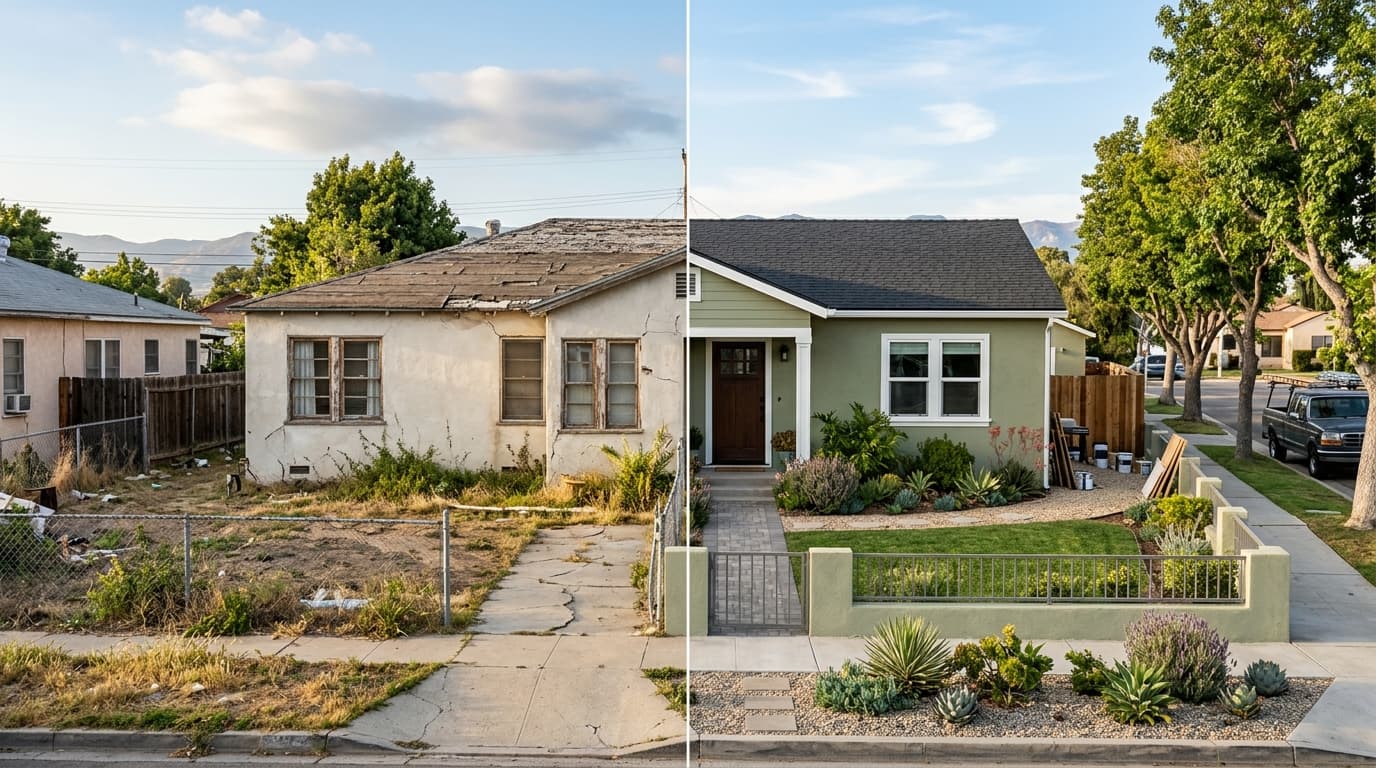
A single neglected house can affect an entire block. Overgrown yards, failing roofs, and broken windows signal disinvestment, and they can discourage neighbors from maintaining their own properties. The reverse is also true: when one home is thoughtfully restored, the effect often spreads. The Housing Renewal Pathway is our approach to turning distressed residential assets into safe, dignified homes.
Start with the envelope
The "building envelope" is everything that separates the inside of a home from the outside: roof, walls, windows, doors, and foundation. If the envelope fails, everything else deteriorates. Water intrusion leads to mold and rot; air leaks drive up energy costs; pests find easy entry. Restoring the envelope is therefore the first priority.
Typical work includes repairing or replacing the roof, sealing and repairing exterior walls, replacing failed windows and doors, and correcting drainage so water moves away from the structure. These measures protect the investment and create a stable base for interior work.
Make the systems safe and efficient
Behind the walls, older homes may hide outdated wiring, aging plumbing, and inefficient heating and cooling. Renewal addresses these systems so the home is safe and comfortable to live in.
- Electrical. Updating panels, circuits, grounding, and smoke and carbon monoxide detection reduces fire risk and supports modern living.
- Plumbing. Replacing leaking or corroded lines protects the structure and conserves water.
- Heating and cooling. Efficient equipment lowers operating costs for future occupants.
- Energy upgrades. Insulation, efficient lighting, and where appropriate solar-ready preparation can reduce long-term expenses.
These upgrades are rarely glamorous, but they determine whether a renovated home remains reliable years later.
Craftsmanship in the finishes
Once the structure and systems are sound, finish work makes a house feel like a home. Quality drywall, carefully installed flooring, cabinetry, trim, and paint show attention to detail. The difference between average and excellent finish work is often small in cost but large in impression. It also signals to future owners that the home was restored with care.
This is where skilled tradesmen have the most visible impact. Many of the people who perform this work come through our training programs, which means each finished home also represents skills built and careers launched.
Why "dignified" matters
We chose the word deliberately. A home is more than shelter; it affects health, safety, and a family's sense of stability. A dignified home is structurally sound, free of avoidable hazards, efficient to operate, and finished to a standard that people can feel proud of. Renewal should not be a cosmetic cover-up. It should deliver something that lasts.
Benefits beyond the property line
Restored homes can strengthen neighborhoods in several ways:
- Safety. Fewer vacant, deteriorating buildings reduce hazards.
- Pride. Visible improvements encourage neighbors to invest in their own properties.
- Economic activity. Renovation creates local jobs, and occupied homes support nearby businesses.
- Stability. Well-maintained housing can encourage longer-term occupancy.
The extent of these effects varies by location and circumstance, and no single project transforms a community alone. But consistent, quality renewal across multiple properties can shift a neighborhood's trajectory.
What buyers and local authorities should look for
If you are a prospective buyer, ask for documentation of permits, inspections, and completed work. If you are a municipal or community leader evaluating renewal partners, look for licensed contractors, transparent processes, and a record of finished projects.
Planning for the Day After Completion
A renewal project is not finished when the keys change hands. Provide new owners or occupants with a simple care guide covering the roof, electrical panel, filters, and shutoff valves, plus warranty information and contact details. Small gestures like these extend the life of the work and reduce the chance that a well-restored home slips back into disrepair. Documentation and education are among the least expensive ways to protect a renovation investment.
Case examples are illustrative of our approach and results will vary by property. This article is not legal or financial advice.
See the pathway in action
Want a closer look at how renewal works from start to finish? View the Housing Renewal Case Study to follow the process step by step.